 admin
admin  0
0
 0
0
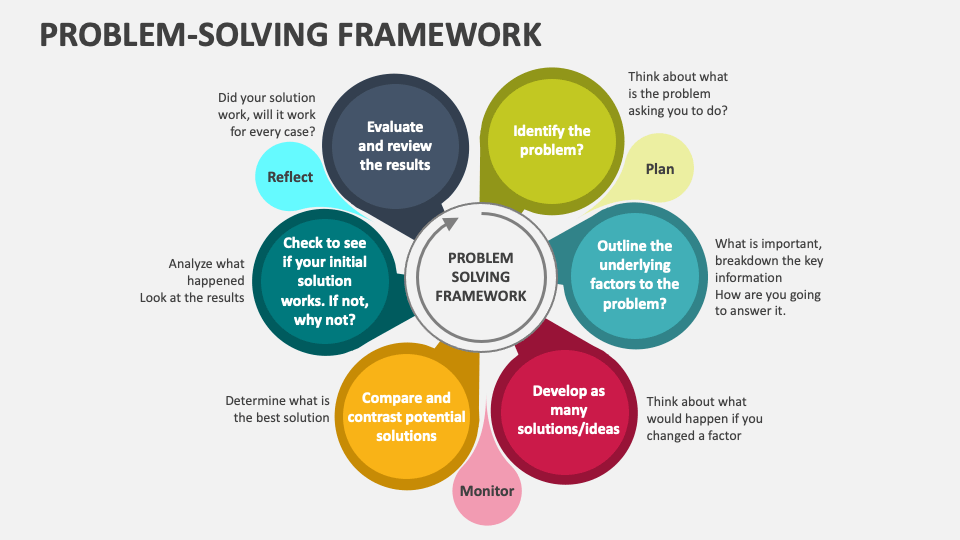
Why Most Problems Stay Unsolved
Organizations spend enormous energy solving the wrong problems. They chase symptoms, build solutions for issues that don’t exist, and wonder why nothing seems to stick. Teams escalate issues in meetings only to find those issues resurface six months later, slightly disguised. The culprit, more often than not, isn’t lack of effort or intelligence — it is the absence of a disciplined practice for understanding problems before attempting to solve them.
This is precisely where problem mapping enters the picture. It is not a brainstorming session. It is not a root cause form. It is a structured, visual, systems-based discipline that transforms a mess of symptoms, causes, stakeholder perspectives, and environmental forces into a coherent map — a shared story of what is really going on.
What Problem Mapping Is (and Isn’t)
Problem mapping is a technique that analyses a central problem by evaluating related ideas and determining how each connects, representing those connections visually in the form of a map to provide the foundation for solving recognised issues systematically. The approach is frequently used to support the idea generation process through the identification of relevant factors and their relationships.
Crucially, problem mapping is not the same as solution design. It deliberately holds solution-thinking at bay until the problem is fully understood. As one practitioner framing puts it, the process helps you think through questions like: What is the actual problem you’re trying to solve? For whom is this a problem? What are the symptoms? What would success look like? What’s standing in our way? These sound simple but are surprisingly hard to answer with precision — especially in large organizations where each function has its own partial view of the issue.
Problem mapping also differs from familiar planning or brainstorming activities:
- It is visual, not verbal. Complex causal relationships are nearly impossible to articulate in prose or conversation without distortion. A map forces structure and makes hidden assumptions explicit.
- It is collaborative, not individual. Mapping benefits from diverse perspectives — involving all stakeholders not only improves map quality but also encourages buy-in from the entire team, streamlining execution.
- It is iterative, not one-time. As one product management source notes, the map is (and always should be) a living and evolving document — updated as new insights emerge from research, data, and observation.
The Anatomy of a Problem Map
Every problem map, regardless of the specific method used, shares a common skeleton:
The Focal Problem
At the center — the spine — sits a clearly worded problem statement. Not a vague frustration (“our customers are unhappy”) but a specific, testable assertion (“customers in the mid-market segment are churning within 90 days of onboarding”). The discipline of writing this clearly is more than half the battle: 80% of solving a tough problem is defining it correctly.
Causes and Contributors
From the focal problem, the map radiates outward toward causes — upstream factors that generate or amplify the problem. In systems thinking terms, these are the drivers: the underlying forces, conditions, or decisions that feed the issue. The process involves repeatedly asking “What causes this?” and “What else contributes?” until a stable picture of contributing factors emerges.
Effects and Consequences
Downstream from the focal problem are its consequences — what it causes or amplifies further along the value chain or stakeholder experience. Mapping effects is just as important as mapping causes, because it clarifies the true cost of inaction and helps prioritize which problems demand immediate attention.
Relationships and Linkages
Lines and arrows connect nodes on the map, showing cause-effect relationships. Drivers can be linked to multiple issues, and sub-issues can connect to multiple drivers. These connections reveal the leverage points — places in the system where a small intervention can produce disproportionately large change. As systems scientist Donella Meadows described them, leverage points are “places within a complex system where a small shift in one thing can produce big changes in everything”.
Stakeholders
The map also surfaces who is affected at each node — not just what is happening but who experiences it and who controls it. This prevents a common trap: designing solutions that technically resolve a root cause but have no champion to implement them or no owner to sustain them.
Core Methods: A Toolkit for Problem Mappers
Problem mapping is not a single method but a family of approaches. The right tool depends on the problem’s complexity, the context, and the audience.
1. Issue Mapping
Developed for tough organizational and strategic problems, issue mapping organizes challenges in a hierarchical form, refining until there is general agreement on the ordering of issues. The process explicitly requires drawing a line through issues over which the team has no realistic control — a discipline that prevents energy from being spent on problems that are real but unactionable. Each remaining priority is then converted into objectives and action steps with assigned responsibility and timing.
Issue maps are particularly powerful in leadership reviews. They make visible why a “simple” issue is actually multi-dimensional — spanning technology, process, people, and customers — and communicate this complexity to decision-makers who may otherwise demand quick fixes.
2. Challenge Mapping
Challenge mapping, documented by veteran innovator Min Basadur in his 2016 book Design-Centered Entrepreneurship, is a powerful, systematic method to quickly articulate the set of interrelated challenges a team faces at any given point in time. Its engine is two deceptively simple questions: Why? and What’s stopping us?
The first question broadens the map upward — surfacing higher-order purposes and context. The second narrows it downward — uncovering obstacles and constraints that block progress. By toggling between these two questions, teams build a map that spans from strategic intent (“Why does this matter?”) all the way to operational blockage (“What exactly is preventing us?”).
The output is a set of precisely worded challenge questions — “How might we…?” framings that capture the real problem at the right level of specificity. The team then selects the question that best represents the highest-impact, most actionable challenge to pursue. This selection discipline is one of challenge mapping’s most valuable features: it forces a choice rather than allowing teams to pursue everything at once.
3. Problem Tree / Upstream-Downstream Mapping
Inspired by social innovation and program planning traditions, this method visualizes the problem as a river — with upstream causes and downstream consequences branching out from a central problem statement. The process asks “What are the causes?” and “What are the consequences?” iteratively, adding variables until the full landscape of the problem is visible.
This approach pairs naturally with forcefield analysis — a complementary technique that identifies the driving forces (what is helping solve the problem) and restraining forces (what is blocking resolution) for each causal factor identified. By rank-ordering these forces, teams can select the aspects of the problem that can be most realistically addressed within available resources.
4. Fishbone (Ishikawa) Diagram
The Fishbone Diagram is a visual tool that places the problem at the head of a fish skeleton and spreads potential causes across categorical bones — typically People, Process, Equipment, Environment, Materials, and Measurement. It encourages breadth-first thinking: rather than drilling down one causal path immediately, the fishbone first captures all plausible categories of contribution.
The Fishbone works best in combination with the 5 Whys technique — asking “Why?” five or more times on each high-priority causal branch to trace it to a root cause that is controllable and fixable. The recommended sequence: use the Fishbone for 10 minutes to map broadly, then run 5 Whys on the most critical branches for depth. This combination is especially suited to cross-functional, recurring, or messy problems where multiple systems are involved.
5. Opportunity Solution Tree (OST)
For product and innovation teams, Teresa Torres’ Opportunity Solution Tree offers a structured discovery roadmap. The tree maps from a business outcome (the first layer) down to customer opportunities — needs, pain points, or desires that, if addressed, would drive that outcome (the second layer) — and then to solution hypotheses and testable assumptions at the third layer.
The OST’s power lies in keeping the problem space (opportunities) and solution space explicitly separate, ensuring teams do not jump to solutions before fully exploring where the highest-impact customer problem lies. Teresa Torres herself strongly recommends working on one opportunity at a time and generating at least three different solutions for it, then testing underlying assumptions rather than building full solutions immediately.
A Step-by-Step Problem Mapping Process:
Regardless of the specific method chosen, a sound problem mapping process follows a common arc:
Step 1 — Define the Focal Problem
Write a clear, specific problem statement. Avoid solutions, blame, or jargon. Frame it as something that can be tested: who is experiencing what, under what conditions, with what observable consequences.
Step 2 — Brainstorm Issues and Drivers
Use open-ended brainstorming to capture all related issues — operational, technical, commercial, organizational, and human. Separate symptoms (observable effects) from root drivers (underlying causes). This distinction prevents teams from wasting effort on the visible tip of a much larger problem.
Step 3 — Map Relationships Visually
Draw the problem map with the focal problem at the center. Connect causes and effects with labeled arrows. Identify which drivers connect to multiple issues — these are early indicators of leverage points. Drivers can be linked to multiple issues; sub-issues can flow into multiple consequences.
Step 4 — Identify Stakeholders and Systems
For each node on the map, ask who is affected and what system — process, platform, or policy — generates or sustains it. This prevents solutions that are technically correct but organizationally un-implementable.
Step 5 — Assess Controllability and Prioritize
Cross out issues over which the team has no realistic control. For the remainder, rank by impact and feasibility: where would the same resources yield the greatest change at the least cost? Narrow the focus to 1–3 priority problems.
Step 6 — Frame Challenge Questions
Convert priority problems into actionable “How might we…?” challenge questions. This reframing converts a statement of dysfunction into an invitation for design — it signals that the problem is solvable and opens the door to creative solution exploration.
Step 7 — Test and Iterate
Use observations, hypothesis-driven interviews, and co-creation exercises to test whether the map reflects reality. Revise as new evidence emerges. The map is never finished — it is a living artifact that evolves alongside the product, the organization, and the market.
Problem Mapping in a Product & Enterprise Context
Feeding the PRD and Product Roadmap
In product management, problem mapping is the bridge between raw discovery and formal specification. Clear, well-evidenced problem statements from mapping exercises become the foundational inputs to Product Requirements Documents (PRDs), epics, and OKRs. Without this bridge, roadmaps accumulate features that address the loudest stakeholder voices rather than the highest-impact customer problems.
When mapping problems to solutions, practitioners recommend documenting problems and solutions separately first — giving each problem a clear name, summary, operational context, technical constraints, market forces, and crucially, a description of the impact in human terms: Who feels this problem, and what does it stop them from doing? This keeps empathy at the center of what can otherwise become a purely technical exercise.
B2B and Enterprise Sales Alignment
Problem mapping has a direct application in B2B go-to-market strategy. A well-constructed value map — built on rigorously identified customer problems — quantifies the business impact, captures friction and risk, and articulates why the solution beats every alternative, including inaction. Buyers, especially CFOs and procurement committees, respond far more to “here’s what’s at stake” than to feature lists.
The strongest enterprise problem maps answer four commercial questions explicitly: What’s the measurable pain? Who feels it most? What’s the cost of doing nothing? What outcomes emerge immediately vs. over time? These questions transform a product story from descriptive to prescriptive — from “here’s what we do” to “here’s the consequence of not acting.”
Strategic and Organizational Problem Mapping
At the organizational level, issue maps help leaders navigate situations where there is no single right answer — only trade-offs, interdependencies, and competing stakeholder interests. They surface how different partners and stakeholders prioritize issues and reveal their assumptions about what is important. This shared visibility creates common language and reduces the political noise that can derail cross-functional initiatives.
Strategy maps using STEEPV (Social, Technological, Environmental, Economic, Political, Values) or PESTLE frameworks help teams map the external environment onto the problem space — ensuring that market forces, regulatory shifts, and technology disruptions are incorporated as drivers rather than discovered as surprises during execution.
Common Mistakes (and How to Avoid Them)
Even experienced teams fall into recurring traps when problem mapping:
The One-Time Activity Trap
Problem mapping is not a workshop deliverable to be filed after a project kickoff. It is a dynamic process that must be updated as conditions change and new information emerges. Build explicit review checkpoints into program rhythms — monthly or at major milestone gates.
The Lone Wolf Trap
Problem mapping done by a single analyst or PM, without input from Ops, Sales, Customer Success, and end users, produces an internally consistent but empirically weak map. Diverse perspectives uncover hidden assumptions and broaden the range of possible interventions.
Jumping to Solutions
The most common failure mode: teams define the problem for about 10 minutes, then spend 50 minutes designing solutions. Premature solution-thinking narrows the map and locks teams into a small corner of the problem space. Deliberately hold the “How might we solve this?” question until the map is complete and the right challenge question has been selected.
Undefined Scope
Without a well-defined start and end point, teams waste effort and encounter scope creep — trying to capture multiple problems at once. The map should begin with a scope statement: what constituencies, what geography, what time horizon, what business context.
Treating Symptoms as Root Causes
Mapping stops too early when teams record visible symptoms (e.g., “high churn,” “missed SLAs”) as the root nodes of the map without tracing them further upstream. Apply the 5 Whys discipline on every node until you reach a cause that is both controllable and structural.
Building a Map, Not a Mental Model
The map itself is not the goal. The goal is the insight that emerges from building it — the shared mental model of how the problem works systemically and how interventions might cascade through the larger system. Review the map with trusted colleagues. Test it against data. Use it to ask “If we change this, which nodes on the map does it affect?”
The Strategic Value of Problem Maps
At their core, problem maps are organizational alignment tools as much as analytical ones. They give teams:
- Shared language — a common reference point that reduces debate about “what the real problem is”
- Prioritization clarity — a structured basis for choosing which problems to address first rather than responding to the loudest voice
- Leverage point identification — insight into where small, targeted interventions can produce disproportionate systemic change
- Assumption surfacing — an explicit record of what the team believes to be true, which can be tested rather than assumed
- Stakeholder buy-in — when stakeholders co-create the map, they invest in the problem framing, making execution smoother and resistance lower
The best product managers, strategy directors, and operations leaders share a common habit: before they discuss solutions, they spend serious time mapping the problem. They treat the map as a first-class artifact — referenced in reviews, updated with new evidence, and used to test whether proposed initiatives actually address the root system rather than just a visible symptom.
In a world of accelerating complexity, that discipline — of seeing the whole system before acting — is not a luxury. It is the foundation of every decision worth making.
Putting It Into Practice: A Simple Starter Template
For teams new to problem mapping, a practical starting canvas combines the best of the approaches above:
| Canvas Element | Guiding Question |
|---|
| Canvas Element | Guiding Question |
|---|---|
| Focal Problem | What exactly is happening, to whom, and with what consequence? |
| Upstream Causes | What factors generate or amplify this problem? |
| Downstream Effects | What does this problem cause or worsen? |
| Stakeholders | Who experiences this? Who controls a contributing cause? |
| Uncontrollable Factors | What is real but outside our influence? (Cross out) |
| Leverage Points | Where would a small change produce the largest cascade? |
| Priority Challenges | Which 1–3 problem clusters demand our attention most? |
| Challenge Questions | How might we address [priority challenge]? |
Run this canvas in a 90-minute workshop with cross-functional stakeholders. Capture it visually on a whiteboard or Miro board. Review it monthly. Let it evolve.
The map will never be perfect. That is not the point. The point is that the process of building it forces the conversations that turn a room full of people with different views of a problem into a team with a shared direction — and that shared direction is where great solutions begin.


